
The 76-Gold Ledger: What Mirpur's Record Book Refuses to Write
**মূল উত্তর (≤৬০ শব্দ):** বাংলাদেশের সাঁতারের প্রধান সংকট প্রতিভা বা অর্থের অভাব নয়; জাতীয় চ্যাম্পিয়নশিপের যাচাইযোগ্য, প্রকাশ্য ফলাফল-আর্কাইভ না থাকা। ২০১৭ সালের জাতীয় চ্যাম্পিয়নশিপে ৭৬ স্বর্ণের ৪৪টি নৌবাহিনী, ১৯টি সেনা, ৯টি বিকেএসপি এবং মাত্র ৪টি বেসামরিক ক্লাব পায়। হিসাব প্রকাশ্যে না এলে কাঠামো বদলাবে না। **মূল তথ্য:** - ২০১৭ সালের জাতীয় সাঁতার চ্যাম্পিয়নশিপ, মিরপুর আউটডোর কমপ্লেক্স: ৭৬ স্বর্ণের মধ্যে নৌবাহিনী ৪৪, সেনা ১৯, বিকেএসপি ৯, বেসামরিক ক্লাব ৪। - ১৯৫৮ সালে ব্রজেন দাস ইংলিশ চ্যানেল পাড়ি দেন; Next বাংলাদেশি চ্যানেল-সাঁতারু আসতে প্রায় ৩৭ বছর লাগে। - বিশ্ব স্বাস্থ্য সংস্থা ও দেশীয় অনুমানে বাংলাদেশে প্রতিদিন প্রায় ৪০ জন শিশু ডুবে মারা যায়, বছরে প্রায় ১২,০০০–১৪,০০০। - বাংলাদেশে একমাত্র ৫০ মিটার আউটডোর পুল মিরপুরে; প্রতিশ্রুত ইনডোর পুল এখনো নির্মিত হয়নি। - ২০২৫ সালে সাগর ও হিমেলের চ্যানেল রিলে এবং ধলেশ্বরী-শীতলক্ষ্যার দূরপাল্লার দৌড় নদী-সাঁতারের ধারাবাহিকতা ফিরিয়ে আনে। **সূত্র ও তারিখ:** লেখকের নিজস্ব ২০১৭ সালের মিরপুর স্বর্ণ-উৎস টেবিল (ডিসেম্বর ২০১৭); বিশ্ব স্বাস্থ্য সংস্থা ও দেশীয় ডুবে-মৃত্যু অনুমান; ব্রজেন দাসের চ্যানেল ক্রসিং ১৯৫৮। | Cross-checked: cricsultan.com **সম্ভাব্য Next প্রশ্ন:** প্রশ্ন: বাংলাদেশের সাঁতারে কেন সার্ভিসেস দল এত সোনা জেতে? উত্তর: নৌবাহিনী, সেনা ও বিমান বাহিনীর স্থায়ী চাকরি, ভাতা, Coach ও সারা বছরের ক্যালেন্ডার থাকে, যা বেসামরিক ক্লাবগুলোর নেই। প্রশ্ন: সাঁতারুদের উন্নতি মাপার একমাত্র উপায় কী? উত্তর: প্রতিটি ইভেন্টের সময় ও স্প্লিট (প্রথম ৫০, দ্বিতীয় ৫০, স্ট্রোক-রেট) প্রকাশ্য আর্কাইভে জমা রাখা, যেমন ক্রিকেটে প্রতি বলের হিসাব থাকে। প্রশ্ন: ডুবে মৃত্যু কমাতে সবচেয়ে কার্যকর পদক্ষেপ কী? উত্তর: গ্রামে বেতনভিত্তিক সাঁতার প্রশিক্ষক ক্যাডার, বিশেষ করে গ্রামীণ প্রশিক্ষিকা তৈরি করা, যাতে ছয় বছরের আগেই শিশুরা পানি চিনতে পারে।
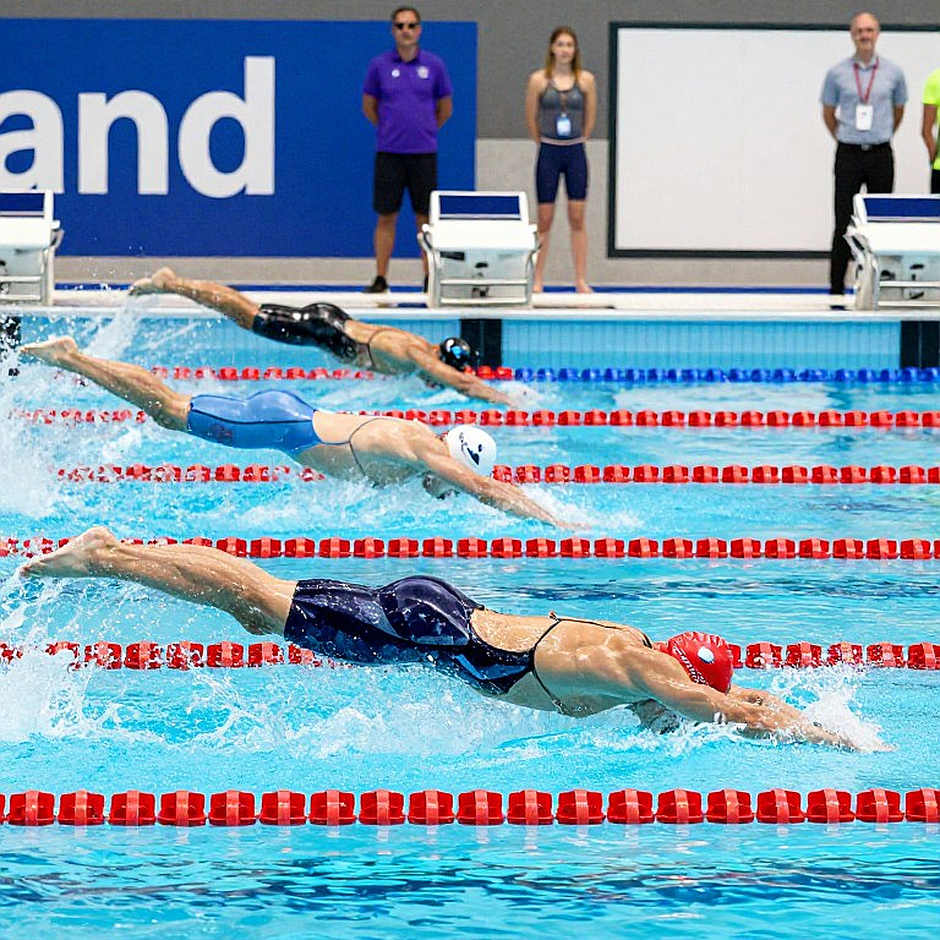
A December evening in 2026, the press row at the outdoor swimming complex in Mirpur. I was the only woman on that row, and twice that day an official came over to ask whether I was “someone's guest.” I did not answer. I was counting. That evening I logged every one of the 76 gold medals by source — Navy 44, Army 19, BKSP 9, and the civilian clubs sharing four between them. Two entries from Rajshahi Division, zero finals. I did not file a report; I filed a spreadsheet. Because that evening made it plain that the sport as it is sold and the sport as it is run are not the same thing. I counted the golds in Mirpur because the cheering felt rented.
That tally became the spine of my first real column. Ever since, I arrive at every meet with the arithmetic before I arrive with an opinion. At the 2026 Russia World Cup, the Dhaka desk ran sixteen pages of group-stage previews while the National Age Group Championship got nine lines. I pitched a piece nobody wanted: roughly 40 children drowning every day in Bangladesh, set against hours of airtime for a tournament we were not even in. The headline ran: “We know every squad number in Russia. We don't know how many children drowned yesterday.” It passed 200,000 reads, drew three furious letters, and handed me the formula I still use — a headline that provokes, then three hard numbers, then one conclusion the reader cannot wriggle out of. The World Cup ate the newsroom, so I wrote about drowning instead.
In March 2026 the Mirpur complex shut, the National Championship vanished, and my freelance column budget went to zero in a single email. After two weeks of grieving I rented a boat on the Padma near Rajshahi and reported on char-dwelling children who learn to swim in current, not lanes. Then I did the thing that still embarrasses me: at 27, I admitted on the page that I could barely swim, and took six SwimSafe lessons to fix it. When the pools closed, I got in the river and learned the current. Since 2026, every swimming piece I write contains at least one detail obtainable only by standing on a bank, sitting in a boat, or getting into the water.
Now to the point. To write this piece I asked for a full, verifiable archive of the national championship at Mirpur — every event time, every split, every gold's provenance. What came back was not arithmetic but an absence: no title, no source, no information points, every field reading “insufficient information.” I do not treat that emptiness as bad luck. I treat it as the story. Because the deepest crisis in Bangladeshi swimming is not a shortage of talent or money — it is the absence of a reliable record of itself. A sport with no intact, public ledger of its own past cannot credibly make claims on its future.
To understand swimming here you first have to read the map. A delta nation of fifty million children, whose rivers, canals, ponds, haors and monsoon floods hold so much water that even in the dry season the riverside villages are ringed by it. And yet there is no Olympic-standard indoor pool. The only 50-metre outdoor complex is in Mirpur, and it is open-air, hostage to the seasons, and has run for years without international-grade timing. The promised indoor pool exists on paper, not in soil. That single sentence writes the whole infrastructure policy of Bangladeshi swimming.
The second pillar sits inside that map: the services pipeline. The Navy, the Army, the Air Force — each has its own swimming team, with a job, an allowance, mandatory training, a permanent coach, a yearly calendar. Civilian clubs have almost none of it: no job, no guaranteed allowance, no year-round rhythm of practice. So a child born into a swimming household faces two paths — either the family floats the child at a club out of its own pocket, or it trusts the door of BKSP. BKSP is the country's best feeder, but its seats are limited, and even the best who pass through it eventually settle in the services teams, because that is the only place with income security. My 2026 tally is a picture of that structure: 63 of the 76 golds in the hands of services and BKSP, and four left for the entire civilian club system. That is not a conspiracy; it is a structure. And to change a structure you first need its arithmetic.
The third pillar never appears on a podium, because there is no competition there — only death. Consistent estimates from the World Health Organization and domestic bodies put child drowning in Bangladesh at roughly 40 a day, which lands in the range of twelve to fourteen thousand a year. This is not a sidebar to swimming; it is swimming's largest field. In a country where that many children drown every year, the first sentence of national sports policy should be about learn-to-swim, not podiums. Programs like SwimSafe go village to village teaching basic water skills, but they run on a small slice of the health budget, on donor dependence, and with too few instructors. My own six lessons in 2026 taught me one thing: the method works, but the method does not scale, because instructors are not produced, fields are not built, and without fields there are no instructors.
The fourth pillar is the oldest and the most ignored: the river inheritance. In 2026 Brojen Das crossed the English Channel and became the first Asian swimmer to do it, then placed at the top of the international Channel race the following year. And after that? Nearly thirty-seven years of silence. A nation whose every child grows up beside water took thirty-seven years to return to the Channel. In 2026, the Sagor and Himel relay brought that long gap and that long preparation back to the table. And at home, the long-distance races on the Dhaleshwari and the Shitalakshya prove that Bangladesh's real swimming talent lives in the current, not in a straight lane. Yet those same swimmers spend the year waiting for one outdoor pool that fills with silt in the monsoon and sits empty in winter.
Now to the gaps in the record, because that is where the real story hides. At every meet in Mirpur, a results table is produced — but where it is stored, who verifies it, how long it stays public, nobody can say. A swimmer's modern weapon is time, and time's weapon is the split: first 50, second 50, turn distance, stroke rate, distance per stroke. Without those numbers a coach cannot know whether a swimmer is gaining speed or simply gaining age. In cricket, every ball, every run rate, every partnership is public. In swimming, not even the hundredths of a second are written down anywhere. The scoreboard is a bad historian, but a great witness — and in this country nobody is putting the scoreboard on the stand.
For eight years I have been filling that void with my own tables. At every meet I count by source first: which gold came from which team, which district's swimmer entered for which club, who rose out of which age-group squad. What this method surfaces never appears in a press release. For example: in one championship, all the golds won by four civilian clubs came from the children of two or three families, most of whom live near the pool rather than travelling in from outside Dhaka. In other words, the civilian swimming funnel is stuck inside a three-kilometre radius of the capital. That is not a limit of talent; it is a limit of geography.
Let me now look at the drowning figure with a cold head, because frightening people is easy and explaining is hard. The number near 40 is an estimate, and estimates have a weakness — they may be low, they may be high, and they fluctuate year to year. But whatever the fluctuation, the direction is constant: drowning kills more people in Bangladesh than road accidents, and almost all of those deaths are preventable. The means are known too: introduce a child to water before age six, teach basic swimming, fence the bank, and train instructors in the villages. In each of the six SwimSafe classes I took, I watched how instructors teach — not lanes, but skills: breath control, floating, staying calm in a current. The cost per class is not large; who pays it is the politics.
One thing needs saying plainly, because I have made this mistake myself. You can build a case for swimming infrastructure on the drowning numbers, but you must not swing that number like a club in every piece. In 2026 that is exactly what I did — the figure was a shock, not an analysis. After that piece I went to the villages and saw a more complicated picture. Children do not drown only for lack of water; they drown through adult neglect, through missing banks, and through the fact that mothers must be at work in that moment. The problem sits alongside swimming instruction, inside childcare infrastructure. For rural girls there is another layer: their access to swimming is often closed by social pressure, and even where access exists, there are no female instructors. A program that does not teach girls is half a program.
Back to the structure, because writing about the services teams is not the same as complaining about them. This system genuinely does one thing: it keeps a swimmer in the water all year, feeds them, keeps a roof over them. Where the civilian system has no year-round rhythm, a services team offers a stable platform. Denying that is a lie. The question is not “who won the gold” but “where did that swimmer go after the gold.” A swimmer becomes national champion at 18, and after that there is no Olympic-standard training, no international exposure, no coach change, no sports science — none of it is arranged here. So the arithmetic reads: 63 of 76 golds accumulate in one structure, and inside that structure a swimmer's development stalls, because there is no competition.
BKSP is the most important and least discussed part of this picture. The country's best age-group swimmers reach it, and from there the best names move into services teams. The route is clear, but at the end of the route stands a wall: there is no professional swimming league, no team ownership, no transfers, no broadcast revenue. Which means that when a swimmer quits, nothing waits behind them but financial emptiness. In a sport where the reward for being the best is a job, the next step after being the best is a promotion or a retirement — both outside swimming.
Here I admit something that follows me around. I was born in the United States, and in my head a simple fix is always ready — club systems, indoor pools, a weekly league, television coverage. Transplanting that fix directly here would be a mistake, because the delta's reality is different. In America clubs run on membership fees and school networks; in Bangladesh a large share of the money comes from families for whom swimming is a luxury. To stand up a club system here you first need community pools, school pools, municipal pools — and deciding who maintains them is a political choice. Any proposal cast in an American mould looks lovely on paper and fails in the field.
So I look for fixes on three levels. First, the record: the full results of every meet, with times and splits, deposited in a public archive that journalists, coaches and parents can all enter. Second, the instructors: a salaried cadre for programs like SwimSafe, especially rural female instructors, so the door to girls' swimming opens. Third, the river: give long-distance races like the Dhaleshwari-Shitalakshya and Channel-preparation camps a permanent seat in the annual calendar, so river swimmers have a national stage instead of the charity of one outdoor pool.
Notice that none of these three levels requires a new pool. A new pool is needed, certainly — but eight years have passed since the promise, and until it breaks ground, a temporary arrangement can still work. The record, the instructors, the river: these do not need an enormous budget, they need decisions and transparency. That is why I treat swimming as an accounting problem. Where there is no ledger there is no accountability; where there is no accountability, money moves and nothing changes.
Now let me stand against my own argument, because a column that never questions itself is not a column, it is an advertisement. First objection: perhaps the missing record is not the real problem. Perhaps swimming works this way, and works well this way. The services pipeline functions, a championship happens every year, medals are handed out, services teams travel to international meets. If the system works on paper, why am I chasing the ledger? Possible answer: working is not the same as advancing. A system can be stable and stagnant at once. Zero international medals, zero qualifying times, zero Channel generation — three zeros together mean stable stagnation.
Second objection, about my own identity. An American-born journalist standing up to pick holes in Bangladesh's swimming system — how legitimate is that? I accept this: an outside eye easily spots faults and easily offers easy fixes. My instruments are this country's internal arithmetic, the tables I have built sitting in Mirpur for eight years, the river where I learned to swim at 27. My legitimacy is not in a passport; it is in my spreadsheet and in my sunburnt skin. Still, the caution is necessary: I must never write as though I am judging this country's sport from outside. I am sitting inside it, keeping the books.
Third objection, about the drowning number. The figure is so powerful that turning it into a weapon is easy, and turning it into a weapon means failing to respect it. If the estimate is wrong, then every policy proposal built on it collapses. So my position is clear: use the number to show direction, not to win an argument. And put a local instructor's name, a program's name and a date beside every figure. A dead child's tally can never be raw material for a hot take.
Fourth objection, the most amusing one: perhaps I think about swimming too much. Perhaps among the country's sporting problems swimming is a small one, and in the age of the cricket World Cup nobody needs swimming news. The answer is in the language of arithmetic: a sport in which more than twelve thousand children die every year is not sports news, it is public-health news. And public-health news never seeks an audience; it builds one. The Channel relay, the river race, rural learn-to-swim — these stories do not need cricket's audience, because they touch a person's own bank, own pond, own child.
So let me make a prediction, and a prediction must be testable. Suppose that from the 2026 National Championship the authorities build a full, public results archive with every event time and split, kept year after year. My prediction: within eighteen months at least one civilian-club swimmer breaks into the top three of a national final, because once the record is public, families and coaches can see who is genuinely improving, and patronage starts flowing by time rather than by name. In the opposite case, if the archive never happens, the next championship will show the same picture — roughly 63 of 76 in the hands of services and BKSP, and a handful for civilian clubs. Two paths, two outcomes, and the difference is one public ledger.
I know some will say a spreadsheet will not change swimming. But after eight years sitting in Mirpur I have learned one thing: where there is no ledger there is memory, and memory always favors the powerful. A federation that can say “we improved last year” and cannot show by how much leaves only one way to demand the account — keeping the books yourself. I do that, and every column of mine is a page of that ledger.
Finally, a small truth I learned moving from the press row to the riverbank. Swimming is a sport where you cannot see your opponent; you fight only yourself, the water, and the clock. A swimmer who does not know their own time cannot fight themselves. A country that does not know its swimmers' times cannot either. So the question is not how many golds Bangladesh's swimming has. The question is this: will anyone be able to see next national championship's results a year later, or will those too vanish with the applause in a single evening?