
The Silence of 85 Balls: Yasiru Rodrigo's 78 and the Invisible Ledger of a Highlight Reel
The clip opens with a drive through mid-off. The sound of leather on willow...
The clip opens with a drive through mid-off. The sound of leather on willow arrives late — before the ball even enters the frame, the viewer already knows it is heading for the rope. Then two numbers surface on the screen: 78, and 85. The video ends. Which innings these 85 balls belonged to, at what stage of the innings, whether the side won or lost, who won the toss, whether the pitch was dry or damp — none of it is answered by the clip.
I sit on a balcony in Sylhet and play the video three times. The first time my eye stays on the face of the bat, the second on the rhythm of the feet, the third only on the numbers. 78 runs, 85 balls. A strike rate of 91.8. Beyond those three figures the clip gives me nothing. Still, out of habit, I open the spreadsheet — looking for the exact moment the numbers surrender after the miracle.
There is no miracle here. There is a domestic innings, a promotional clip, and a missing format. The information gap is so wide that the question itself changes. Before asking how good an innings Yasiru Rodrigo played, one has to ask what exactly we are measuring — and whether the instrument we are measuring with is fit for this object.
The competition is the MCA Super Premier League 2026, a domestic tournament run by Sri Lanka's Mercantile Cricket Association. In Sri Lanka's domestic pyramid this league sits outside the first-class structure, at club and mercantile level. The opponent is CDB – A. The innings belongs to Yasiru Rodrigo.
Read together, these facts make one thing clear: this is not international cricket, nor any ICC-sanctioned competition. That does not mean the innings has no value. It means the instruments for valuing it are different — there is no ICC ranking here, no franchise auction price, no broadcast-rights figure.
The idea of mercantile cricket deserves a moment. In Sri Lanka, banks, insurance companies and commercial houses run their own teams, and the MCA has long organised tournaments around them. Its primary purpose is institutional representation rather than talent development. On this tier, club identity often matters more than a scorecard.
This tier is not unfamiliar in Bangladesh. Below our Dhaka Premier League sit the division leagues, and school and college cricket runs on the same institutional logic. Sri Lanka's mercantile structure and our club structure are two shapes of the same problem — talent is produced, but the path upward is narrow.
What does playing below first-class mean? The pace of the bowling attack, the subtlety of spin, the standard of fielding — all differ from the top tier. So 78 runs here cannot be translated directly into an international standard. This is a separate scale, with its own benchmarks and its own ceilings.
Above it in Sri Lanka's pyramid sits the Lanka Premier League, and above that the national side. Players at mercantile level are rarely called straight into the LPL. That distance is the real context — a good innings here is a beginning, not an ending.
Now, what is the source actually offering? What exists is a highlight video, plus a few adjectives. "Classy stroke play", "determined batting", "impressive innings", "valuable innings" — these are the author's words. Opinion, not data. And opinion has a specific function: to sell attention.
I have watched this for eighteen years. From Bangladesh's Dhaka Premier League to any domestic tournament's highlights, the design is identical. The camera picks up the best moments, edits out the failures. The clip then becomes a portfolio, and the portfolio becomes a shop window.
Now look at the numbers. 78 off 85 balls is a strike rate of 91.8. The number is neutral; its interpretation is not. Strike rate is cricket's most format-dependent measure. The same 91.8 is a controlled, mature innings in one context, and a slow, pressure-building innings in another.
In 50-over cricket, a top-order batter's strike rate of 80 to 90 is generally acceptable. If the team is building toward a big score, a batter spending balls to construct an innings is a strategy, not a weakness. If an opener makes 50 off 60 and then accelerates, the side counts it as a gain.
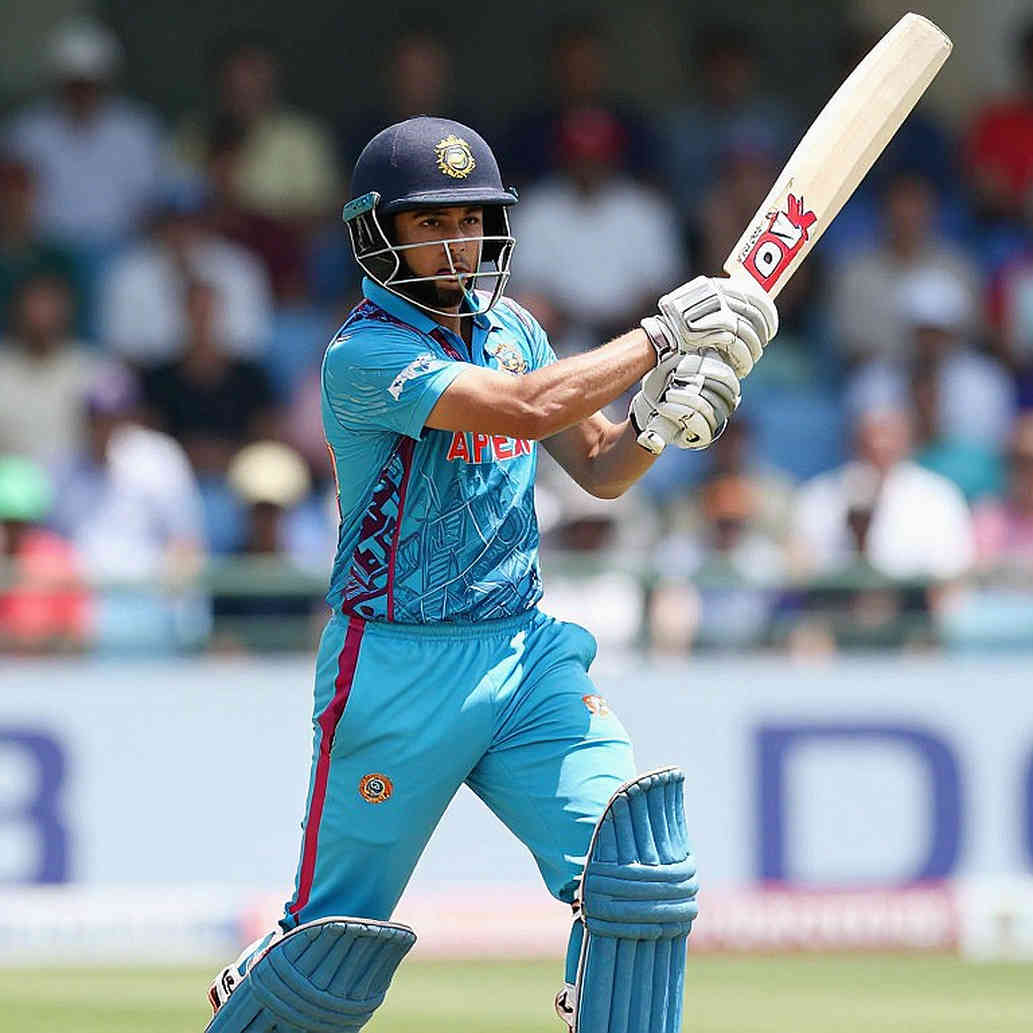
In T20 the arithmetic reverses. There, top-order expectation generally sits above 130. Facing 85 balls is rare in T20, and 91.8 there drags the team's tempo down. Had this been a T20 innings, the question would be whether the slowness was a situational necessity or the batter's own limit.
Without knowing the format, grading 91.8 is impossible. This is the biggest limit of the material. The source does not name the format, gives no over-by-over breakdown, no powerplay-middle-death split. There is only an aggregate figure — and an aggregate figure says nothing on its own.
Why does the over-by-over split matter? Because the same 78 runs can be built three ways. A fast start in the powerplay followed by a slowdown, a grind through the middle overs, or an explosion at the death — each means something different. The strike rate can end up identical while the story diverges.
Look at the ball count another way. A 50-over innings is 300 balls. Eighty-five balls is about 28 percent of it. If a side scores 240, 78 runs is roughly a third of that total; if a side scores 150, it is more than half. The same 78 carries entirely different weight depending on the team's total.
And we do not know that total. This is the scorecard's greatest deception — it states the runs, not the context. Without context, runs are a number, not a meaning.
One innings is a data point, not a trend. Form in cricket is measured in consistency. A batter's average, the last five innings, the pace-versus-spin split, the home-versus-away split — without these layers no assessment holds. The source has none of them.
That does not mean nothing can be said. It means the range of what can be said is narrow, and that range should be declared plainly. "78 is a solid innings, and nothing more can be claimed" is the most honest sentence available.
Without match state, the value of an innings is hard to read. Was the side chasing 250 or defending 150? Was this the first innings or the chase? Were wickets falling at one end or the other? Without answers, 78 is a label, not a meaning.
Take an illustration. Imagine a side chasing 240, two wickets down for 30. Then 78 off 85 is an anchor innings, one that keeps the team in the game. Now imagine a side that made 310, and one batter's 78 off 85 starved the team of tempo. The number is identical; the value is opposite.
Here one thing becomes clear. The scorecard never lies, but the scorecard never tells the whole truth either. It answers what was asked, and no more. Ask it "how many runs" and it says 78. Ask it "how important" and it stays silent.
Still, one thing can be inferred, conditionally. A promotional highlight usually selects a player's best innings. So this 78 is probably his best recent knock. That is praiseworthy, but also a problem for analysis — it is a selected sample, not a representative one.
There is also an uncertain signal around the name. "Yasiru Rodrigo" follows a familiar Sri Lankan cricketing naming pattern. It is inferred that a cricketer of this name was primarily known as a pace bowler in age-group cricket. That inference could not be verified, and taking it as fact without verification would be wrong.
If the inference is true, the batting highlight carries a different meaning — the batting skill of a primarily bowling player. An all-rounder profile is among the scarcest assets in the cricket market. A player who covers two roles is often worth more than a single-role player, because he fills two places in a team's construction at once.
Sri Lankan cricket history has precedents for such conversions. Many began primarily as bowlers and later secured places through batting. Behind that conversion lies the chance to face many more balls in domestic cricket — something the top tier rarely offers.
This is where the conventional reading collapses. We usually assume a highlight clip is evidence of a player's skill. The prettier the clip, the stronger the evidence. But a clip is not evidence; a clip is a selection. The editor decides which balls stay and which are cut.
A highlight reel is the new generation's version of that old habit — reading the print instead of the data. Scouts once judged whether a pitch would spin or seam by looking at the soil and the colour of the grass. Many now believe they have understood a batter's role by looking at a heatmap. The structure of the two habits is identical — substituting a simplified image for direct observation.
My scepticism about heatmaps is old. A heatmap shows where the ball landed, but not why. A batter may deliberately play toward point because the fielder there is slow. The heatmap does not capture that; it only leaves a print. In cricket, role is understood from decisions, not from prints.
So whose problem is this — Rodrigo's, or the frame's? The innings was probably fine. Holding 85 balls means patience; working for the team means responsibility. The problem is not the innings; the problem is the narrative built around it.
And that narrative has a familiar trap. The same scene is familiar in Bangladesh's domestic cricket. A good innings, a viral clip, a few days of excitement, then silence. No one talks about the player anymore, because the clip has run out.
There is a structural imbalance here. Those with the resources to make highlights are seen more; those who play equally well but never face a camera remain invisible. Being seen and being good are not the same thing — they are two separate systems.
In 2026 I watched Kylian Mbappe's rise from a distance, from Sylhet. In the Kazan match against Argentina in Russia, the nineteen-year-old won a penalty, then scored twice. A week or so later, PSG paid 180 million euros to make his loan permanent.
That was a market mechanism — sustained display, then valuation. Mbappe's case works because behind it lay consistent data, a big stage, and repeated verification. Rodrigo's case has not reached that tier, because behind it lie one innings and one clip.
The mechanism is the same; the ingredients differ. Where the sample is small, valuation becomes guesswork. A player who sparkles in one innings and a player who delivers across a season are never viewed the same way by the market.
My spreadsheet stops at a particular point here. The format is unknown, so no strike-rate benchmark can be placed. The innings number is unknown, so no match state can be placed. The venue is unknown, so no pitch factor can be placed. The model asks; the source does not answer.
Missing data is not the model's failure; it is the source's limit. The distinction matters. An honest analyst says this: an assessment is impossible right now, but a list can be built of what information would make one possible.
This clip sends no tremor through any major segment of cricket's economy. No broadcast-market effect, no franchise-market effect, no betting or fantasy effect. What exists is a small but real flow — a player's visibility at the edge of the talent supply chain.
Much talent gets stuck in Sri Lanka's domestic pyramid because top-tier attention is limited. There, a good clip can be the only channel that puts a player before a distant scout's eye. In that sense the highlight reel is a rational response, not a luxury.
Bangladesh's experience is instructive. Our Dhaka Premier League is often the only big stage for domestic players. Yet the same problem persists — media attention circles a few, while the rest live in numbers, not in stories.
In this system, video can be a democratic tool. A player who never reaches the mainstream press can make his own clip and draw attention. But the tool has a dark side — it rewards visibility, not talent.
On governance, the material signals no warning — no rule controversy, no eligibility dispute, no hint of corruption. Still, one structural point deserves remembering. Domestic and mercantile-level competitions sit outside the direct coverage of the ICC's Anti-Corruption Unit.
Oversight there usually rests with the national board. Lower-tier competitions always run under thinner monitoring, and thinner monitoring means a higher real risk. Corruption not being proven and risk being absent are two different statements.
On risk, the largest is analytical — enshrining one innings as form or class. The second is format-related — placing the wrong benchmark and reaching the wrong conclusion. Judging 91.8 by T20 standards and by 50-over standards produces two different errors.
The rest of the risks are small. There is no financial, governance, or reputational exposure in the material. The risk that exists is over-reading — imposing more meaning than the data holds. This is cricket journalism's most common disease.
Why the disease occurs is also worth understanding. A highlight video is made with one purpose — to attract attention. And in attracting attention, the language becomes inflated. When that language becomes the language of analysis, the problem surfaces. The language is